
Learning is the first thing that we expect a child to do. From social behaviors to academic education, everything revolves around learning. However, in the past few decades, we have seen that learning, especially in education, has become rather boring.
The process of learning used today is not just slow and faulty, but it can also be ineffective.
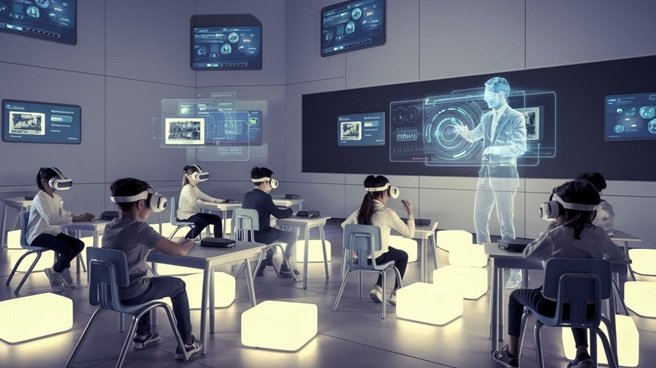
This is the reason every year, experts come up with new and innovative learning methods. In the past few years, technology has become an important part of the education industry.
So, if you are curious about different ways technology is contributing to the evolution of learning, then keep reading. This write-up will look at some of the simple yet effective ways technology will impact the future of learning.
Online Will Replace Traditional
Online education has become an important part of the current learning process. Most of the universities offer online subjects so the student can continue their learning from anywhere in the world. Similarly, some universities maintain online learning libraries so the students can revise and revisit lectures.
However, most universities do not offer full virtual courses and lectures. Instead, students have to rely on open source libraries, video sharing platforms, and free course hubs to learn new skills and stay updated. However, amidst the immigration and visa crisis, it is expected that soon, universities will start offering online degree programs.
For instance, if you are a student in the US but you have enrolled in a foreign university, you no longer have to travel there. Instead, you can use your laptop and any reliable internet connection, like Spectrum, to continue your online learning. The ISP is not just affordable and accessible, but also offers 24/7 Spectrum customer support so you can seek technical guidance or learn about their internet plans.
Now, with the help of these programs, students will get to learn and complete their formal education from anywhere in the world. This will further help in reducing the overall cost of education and might even offer a solution to the growing student debt issue.
Gamification of Learning
Gamification has long been part of educational apps. Most of the learning apps available today are built on this principle. The goal is to divide lessons into small, bite-sized lessons and then set a reward for the learner to complete the course.
However, most of the learning apps using this process are not offering official certificate or a degree. Moreover, they are also not recognized by a learning body. Apart from this, we have seen this happening only in the case of private learning apps.
In the next few years, gamification will become a part of traditional learning, the college system, and degrees. Students will no longer be required to sit through lengthy lectures, record everything, take tests, and wait for results.
Instead, education will be easier with nearly no waiting time. This will help the learner to stay motivated throughout the learning process without facing any setbacks.
Artificial Intelligence For Learning
In the last few years, AI has become a buzzword. We have seen AI becoming a crucial part of nearly every industry, and education is no exception. Currently, students are using AI in a personal capacity. However, teachers are discouraging the use of AI not just for learning, but also for problem-solving and assignment preparation.
It is expected that in the future, students will no longer have to use AI in a personal capacity. Instead, teachers and university boards will start offering AI-based learning for everyone. Apart from this, different universities and colleges will get to create their own AI that will be integrated into their education portal for a seamless learning experience.
With the help of AI, everyone will be able to make the most out of their learning experience, reduce the overall time spent on learning, and speed up their learning process.
Personalized Learning
Within the traditional style of learning, personalization is not an option. Students are sorted into classes, and each class has a set curriculum taught by a professor. Every student is expected to learn the same content and at the same pace.
However, this system neglects the strengths and weaknesses of the learner. Students with a strong subject background usually end up outshining, while others keep struggling. Moreover, students who need special attention also get neglected.
Now, thanks to technology, the education industry will be able to offer a personalized learning experience. Every student will not just get to choose their subject and topic, but also set their learning pace based on their convenience.
This personalized learning experience will also help the professionals to explore advanced learning opportunities for career progress.
Practical Work in Learning
When it comes to education, Finland is ranked as the best. What are they doing that others aren’t?
Well, Finland has a curriculum that is based on real-life issues. The country has designed its education system with an aim to help the kids navigate through the basic life skills, and social media is part of it. In the next few years, we will see more countries stepping up and including practical studies like social media news, scams, phishing, fraud detection, financial literacy, part-time working, and more.
Simply put, there are so many ways technology has affected the education system.
The above-mentioned are some of the most common ways technology will further contribute to the evolution of learning.